




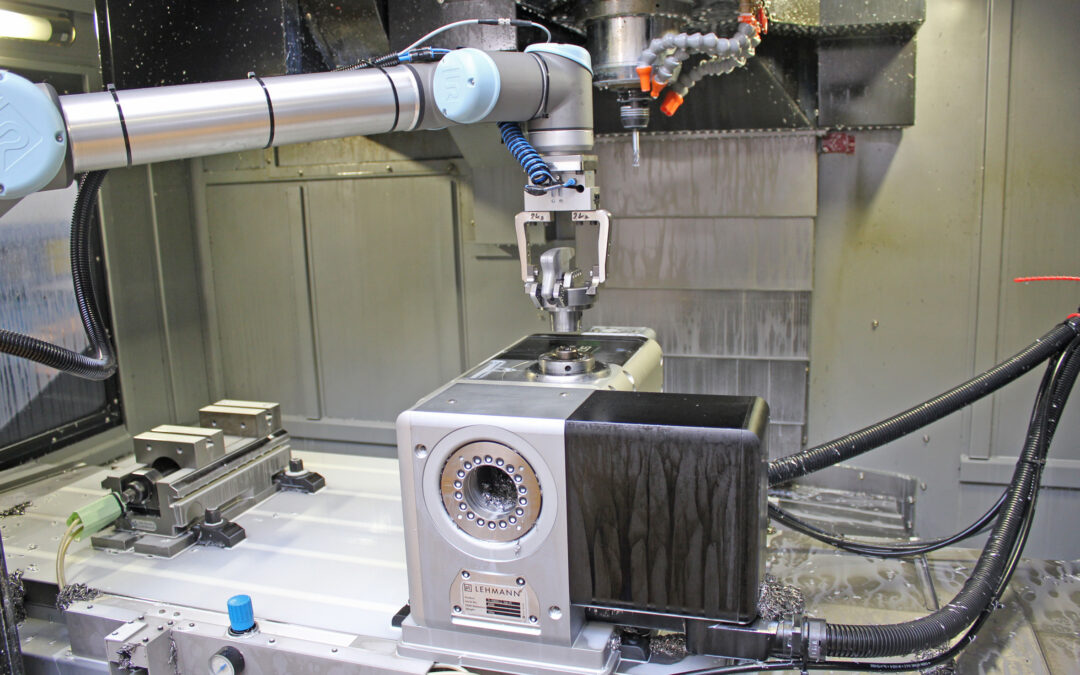
The demands for precision in high-performance machining have reached a level by 2025 that pushes conventional clamping systems to their limits. The integration of the HSK (Hollow Taper Shank) interface into CNC rotary tables, as realised by pL LEHMANN with the ripas system, represents a technological breakthrough. HSK systems were originally developed for high-speed spindles and are characterised by a combined taper and face contact.
Compared to the classic steep taper (SK), the HSK offers five to seven times higher bending stiffness. This stability results from the elastic deformation of the hollow taper during the clamping process, which ensures it fits snugly both on the taper and the face of the spindle. In a CNC rotary table, this interface enables axial positioning accuracy in the micrometer range. Users such as Fischer USA report that the ripas system allows sensor wheels to be manufactured with a radial eccentricity of less than five microns.
The advantages of the RIPAS system for process safety are manifold:
- RepeatabilityPrecise axial fixation allows clamping devices to be changed without needing to re-measure the zero point. This often reduces set-up times to under 30 seconds.
- Torque transmissionThe form-fitting connection via keyways allows for the absorption of high cutting forces, which is particularly important for heavy-duty machining of titanium or stainless steel in the aerospace industry.
- Centrifugal advantageAt high rotational speeds, such as those achieved by the pL LEHMANN 900 DD series with up to 3,300 rpm, centrifugal forces amplify the clamping force of the clamping elements, which further stabilises the seat of the tool or workpiece.
- Zero point voltageThe ripas clamping system is a modern zero-point clamping system, extremely space-saving as it is fully integrated into the spindle. Thanks to the full-surface face contact, radial forces and moments are absorbed equally well from all sides.
 German
  Polish
  Spanish
  English