




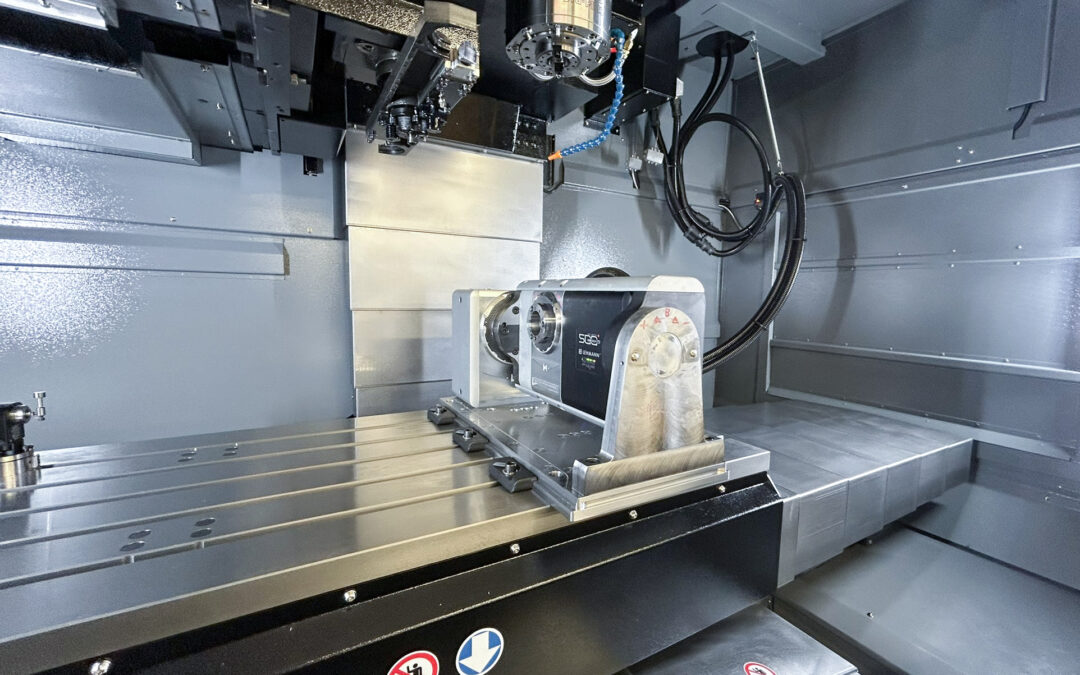
The switch from 3-axis to 5-axis machining is a big step for many companies, often accompanied by concerns about collisions and programming errors. Experts therefore recommend a structured approach:
- Entry via 3+2Begin the positioning machining. The logic is identical to 3-axis machining, only the workpiece is rotated beforehand.
- Digital simulationUtilise CAM systems with integrated machine room simulation. This prevents expensive collisions, which with 5-axis systems can quickly cause damage in the five-figure range.
- Process monitoringSystems such as the pL-smartBox offer an additional layer of security by immediately registering abnormal shock loads or even stopping the process earlier, but above all, they help to avoid consequential damage through faster and more precise localisation or make damage to other components recognisable earlier.
- Stiffness before speedWhen selecting a rotary table, pay attention to clamping forces. A fast table that vibrates during machining will negate productivity gains through high scrap rates.
 German
  Polish
  Spanish
  English