



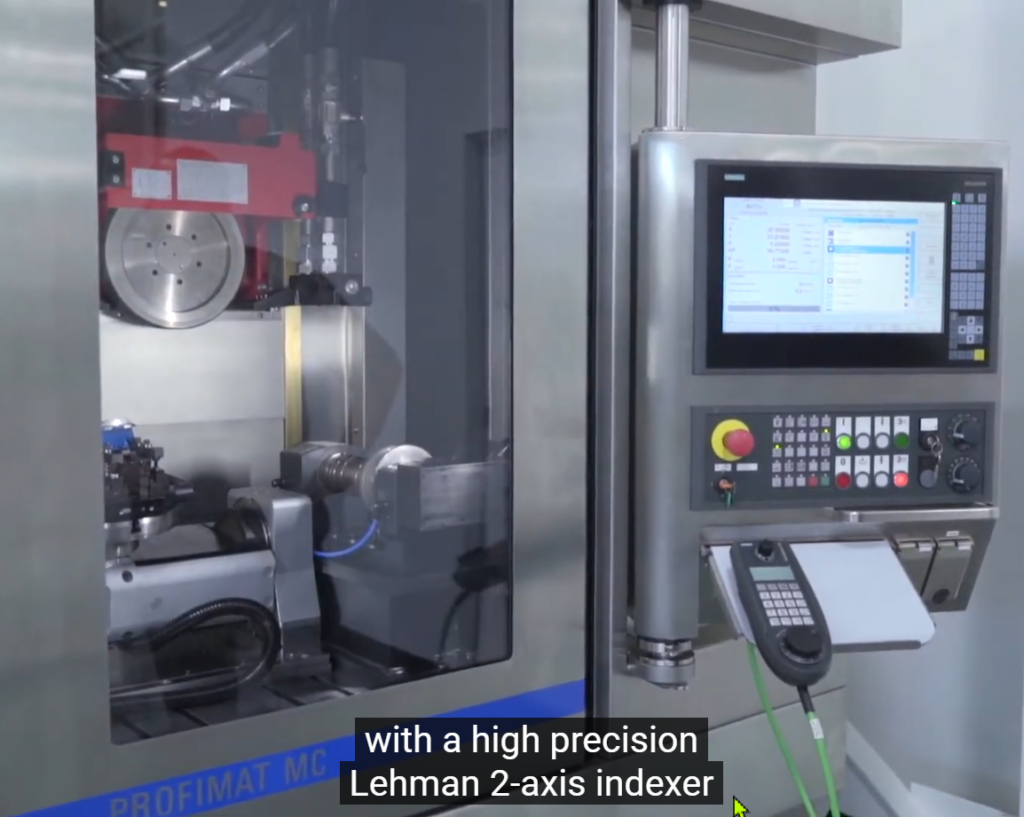
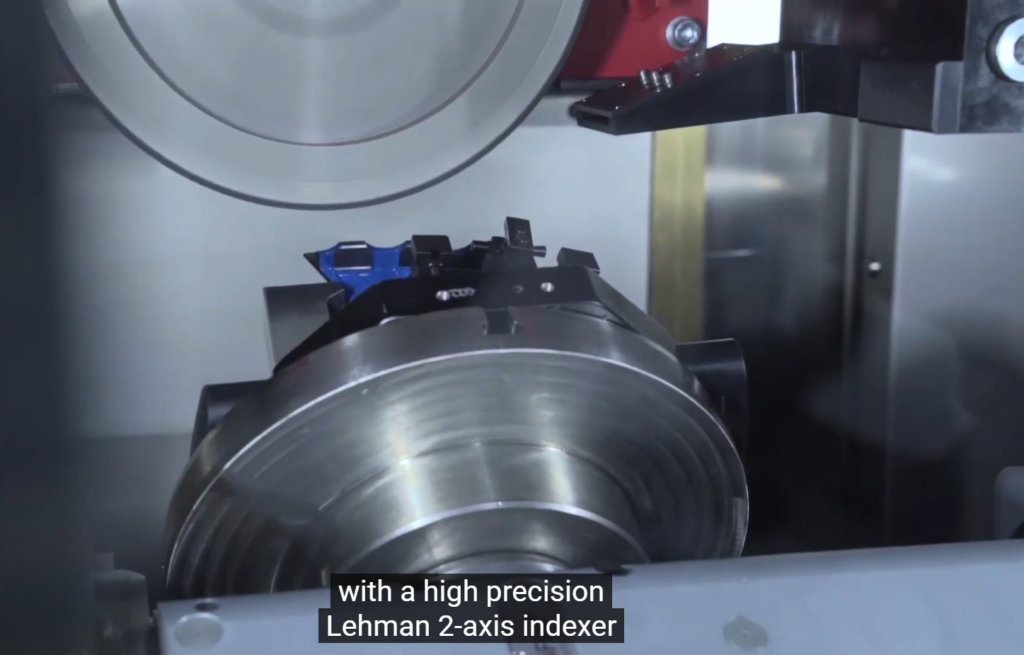
Many workpieces are required for turbines, which are produced using complex grinding processes. CNC rotary tables from pL LEHMANN are often used here because they are particularly well-suited for this purpose. However, rotary table applications are also an ideal solution for prototype or small-batch production (milling/drilling).
Advantages
In grinding mode:
– highest accuracies possible
– extremely clean surfaces achievable
– compact yet stiff and stable
Workpiece clamping systems
partially or fully automatable
– high degrees of freedom, which is often crucial on surface grinding machines
In milling/drilling:
– robust and compact
Flexible
– Use of tension bridges (with a vertical machining centre, almost the same capabilities as with a much more expensive horizontal machining centre)
Disadvantages
For workpieces larger than Ø400mm, pL LEHMANN CNC rotary tables are no longer suitable. Otherwise, disadvantages compared to fully integrated machine concepts are actually hardly known.
Frequently Asked Questions
Why are there so few manufacturers of grinding machines who master this particular discipline? Answer: It would be presumptuous to attribute that to the CNC rotary table. But the fact is that pL LEHMANN has particular aces up its sleeve in this area and has been successfully collaborating with renowned machine manufacturers for decades, sometimes almost exclusively.
 German
  Polish
  Spanish
  English